Case Study

Optimise

AI-Powered Steel Manufacturing Forecasting Engine: Predicting costs, streamlining procurement, and de-risking projects for the steel industry

A steel plant operator approached Galific with a familiar challenge: accurate cost forecasting was vital, but their teams relied on manual spreadsheets, scattered vendor inputs, and disconnected estimation tools. This led to procurement delays, cost escalations, and frequent project revisions. They had years of project data, historical costs, vendor quotes, material grades, location-specific pricing, but no way to turn it into intelligent forecasts. We proposed a data audit to assess whether predictive modeling could deliver reliable cost estimates.

The audit revealed strong predictive signals: correlations between project size, steel grade, location, labor rates, and final costs were clear and consistent. Their historical data contained enough intelligence to build accurate forecasting models. With this confirmed, we built Optimise, a platform that simplifies multi-variable forecasting into a fast, clear, and reliable workflow.

We helped design the platform’s:
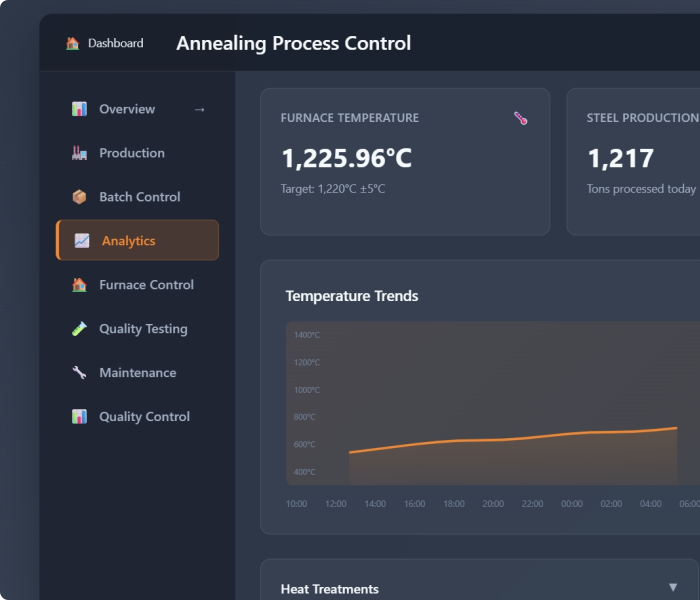
Modular forecasting logic engine using historical project data Real-time cost benchmarking with regional pricing intelligence Anomaly detection for inflated quotes and inventory mismatches Interactive, field-optimized interface for easy input and visualization
dash

Key Highlights

At Galific, we understand the complexity of industrial scale operations. Optimise was born out of the need to give steel manufacturers and contractors an edge in cost control, speed, and predictability. With pricing volatility and procurement bottlenecks being major threats, we focused on delivering a system that simplifies multi variable forecasting into a fast, clear, and reliable workflow backed by data and designed for usability

The Challenge

Steel manufacturing and construction companies operate in high-pressure environments where accurate cost forecasting is vital. Before Optimise, teams relied on manual spreadsheets, scattered vendor inputs, and disconnected estimation tools. This led to delays in procurement, cost escalations, and frequent revisions during project execution.

The Audit-First Approach

Through discovery sessions with civil engineers, plant supervisors, and procurement heads, we mapped real-world estimation challenges, especially in multi-city, multi-vendor operations. We analyzed 3 years of project cost data to identify gaps between estimates and actuals. The audit revealed that 75% of cost overruns were predictable based on historical patterns. This validated that data-driven forecasting could dramatically improve accuracy

The Solution

Intelligent Cost Modeling

We engineered a modular logic system that takes raw inputs, such as project area, grade of steel, local labor rates, and expected delivery time, and generates granular cost estimates. It benchmarks prices with historical project data to detect anomalies and provide region-wise accuracy.

Field-Optimized Interface

We implemented a card-based layout for easy input entry, added interactive breakdowns for each cost component, and provided AI-based recommendations for better decision-making. Every detail, from unit selection to material grade dropdowns, was optimized for field usability.

Real-Time Vendor Benchmarking

The platform compares current vendor quotes against historical pricing trends, flagging unusually high or low quotes for review.

The Results

01

35% Improvement in Cost Accuracy - Forecasted costs now align within 8-10% of actual project spend, compared to 30-40% variance with manual methods.

02

50% Faster Procurement Cycles - With real-time alerts and anomaly flags, procurement teams are better equipped to negotiate with vendors, avoid overspending, and maintain consistent supply chains.

03

₹1.2 Cr Saved in First Year - By catching inflated vendor quotes and optimizing material procurement, one plant saved over ₹1.2 crore in the first year of using Optimise.

04

Scalable Across Project Sizes - Optimise handles varying project sizes, from factory sheds to full-scale industrial infrastructure, adapting to new data and vendor pricing in real-time.

05

60% Reduction in Cost Escalations - Proactive anomaly detection and accurate forecasting reduced mid-project cost escalations and change orders significantly.

06

Better Vendor Accountability - Transparent benchmarking forced vendors to justify pricing, leading to more competitive quotes and improved supplier relationships.

07

Management Visibility - Analytics dashboards allow top management to compare forecasted vs actual costs, helping them fine-tune procurement policies and prevent margin erosion.

08

Reduced Dependency on Spreadsheets - Teams eliminated error-prone manual estimation processes, improving both speed and reliability of cost planning.

Key Technologies Used

Backend Development

Python Python
Node.js Node.js
MongoDB MongoDB

Front-End Development

ReactJS ReactJS
NextJs NextJs

Conclusion

Galific's collaboration on Optimise has given the steel industry a practical, AI-powered solution that combines forecasting accuracy with intuitive design. The audit-first approach ensured we built models that the client's historical data could reliably support. By reducing dependency on guesswork and spreadsheets, we've helped manufacturers and contractors gain deeper control over operational costs, improve procurement timelines, and boost project profitability. Optimise stands as a testament to how domain-focused AI tools can transform traditional industrial processes.